General information only. ShampooGarage articles are educational and are not medical or individualized hair, scalp, or skin advice.
The roots look dusty by day three, the style slips out before lunch, and a normal shampoo still leaves the lengths feeling filmed. That is the moment a clarifying shampoo earns a spot on the shelf. It is a stronger reset for residue. It is not a personality, and it is not the wash you should reach for every morning.
What "clarifying" actually means
There is no legal definition that forces a bottle labeled "clarifying" to contain a particular cleanser. In practice the word means a formula built to remove more of what a gentle daily shampoo leaves behind. The lather is often bigger. The hair often feels squeaky before you condition it. That squeak is the cuticle with less coating on it, which is useful once in a while and harsh if you chase it every wash.
A clarifying shampoo is still a shampoo. You rinse it out. It does not replace conditioner, and it does not repair a split end. If the label also says "chelating" or lists a chelator such as disodium EDTA, tetrasodium EDTA, or sodium phytate, it is aimed at minerals as well as styling residue. Those are related jobs, not identical ones. Mineral film from hard water and pool metals is covered in the hard-water guide and the swimmer's routine.
Four kinds of residue, and what lifts them
Hair collects different films, and they do not all come off with the same wash.
Sebum. Oil from the scalp travels down the strand. Fine, straight hair shows it first at the roots. A normal shampoo usually handles this. Clarifying is overkill for oil alone unless you have been stretching washes for so long that the scalp feels waxy.
Styling polymers and heavier silicones. Gels, hairsprays, and some serums leave a flexible film. Dimethicone and amodimethicone add slip and shine. Water-soluble silicones, often with PEG- or PPG- in the name, rinse more easily. Heavier ones can hang on, especially on low-porosity hair that does not let product move inside the strand. If styles stop holding and the hair looks dull rather than dirty, this film is a likely reason.
Dry shampoo. Starches and powders sit at the root. They absorb oil, then sit there until a thorough shampoo lifts them. Several days of spray without a real wash is a classic reason the scalp itches even though the hair "looks" clean.
Minerals and metals. Calcium and magnesium from hard water, and copper from some pool water, can cling to the hair surface. A cosmetic clarifier may improve the feel. A chelating wash is the more direct tool. If your shower glass is chalky, start with the hard-water article before you blame the conditioner.
When a clarifying wash helps
Use one when you can name the residue:
- Styles collapse and the hair feels coated after a normal shampoo
- You are switching product lines and want a clean baseline before judging the new one
- Dry shampoo, heavy cream, or hairspray has been in daily rotation
- Blonde or lightened hair looks dull or brassy and you suspect mineral film, not just the toner
- A swim week left the hair rough, and a gentle shampoo did not fix the feel
One clarifying wash, then back to your usual cleanser, is the pattern that works for most people. The point is to remove a layer, not to keep the hair in a stripped state.
When to skip it or stretch the gap
Bleached, relaxed, or heat-damaged lengths are already more porous. A strong detergent lifts what little coating they have and can make them feel like straw. If wet hair stretches like gum and then snaps, the problem is internal weakness, not a film you can wash off. The protein and moisture guide is the better next read.
Tightly curled and coily hair often needs the oils and creams that a clarifier removes. That does not mean you never clarify. It means you do it rarely, keep the cleanser on the scalp, and follow with a rich conditioner on the lengths. People who co-wash most of the time still need an occasional real shampoo so the scalp does not stay coated. That reset is explained in the co-wash guide.
A sensitive scalp that stings with fragrance or strong lather should not "push through" a clarifying wash. Stinging is information. Switch to a mild, fragrance-free cleanser and read the surfactant section of the ingredient-label guide before you try a stronger bottle.
How to use it without overdoing it
- Wet the hair fully. A clarifier on half-wet hair concentrates on the dry patches.
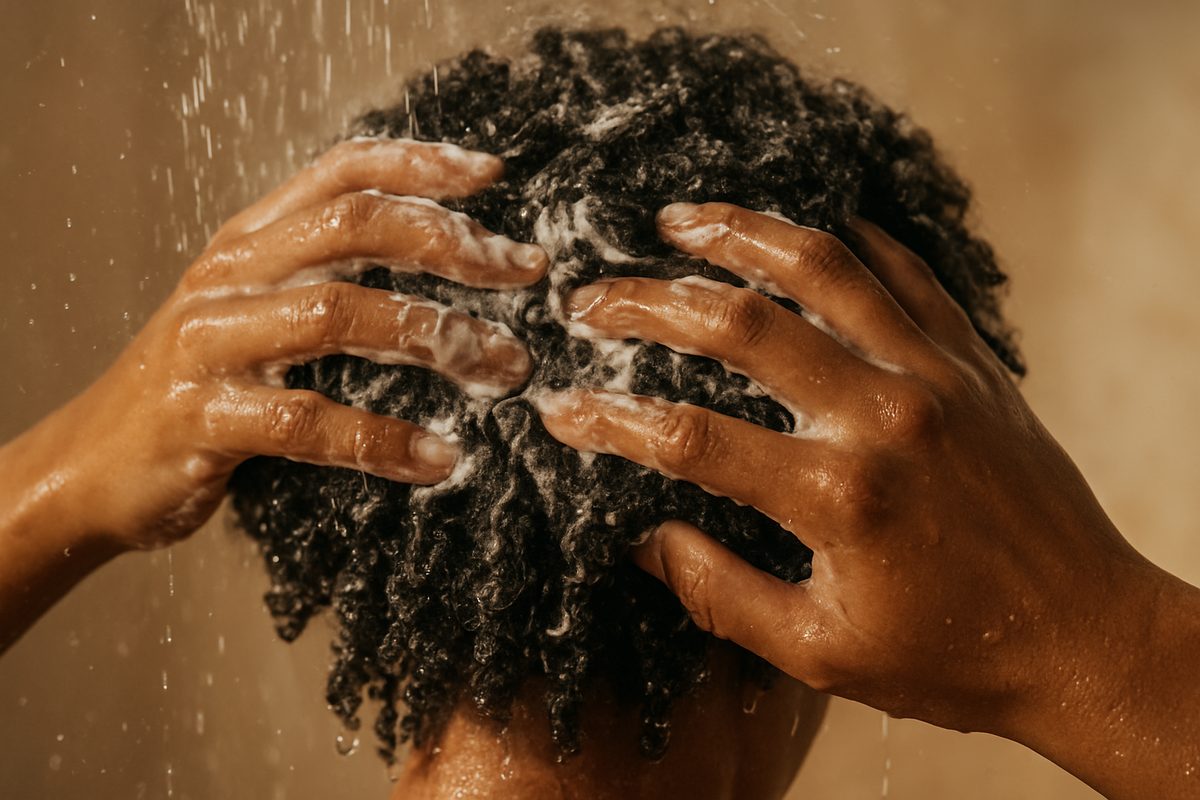
- Apply to the scalp. Massage with the pads of your fingers for about a minute. Nails scrape skin and do not clean better.
- Let the lather run through the lengths. Do not pile the hair on your head and scrub the ends.
- Rinse until the hair no longer feels slippery. Leftover cleanser itches later.
- Condition the mid-lengths and ends. If the hair felt squeaky, use your usual rinse-out and leave it on for a couple of minutes. Detangle while it is on the hair.
- Skip a second strong treatment the same day. A clay mask, a protein shot, and a clarifier in one shower is how hair feels worse, not cleaner.
How often
There is no weekly law. Match the gap to what you put on your head and what comes out of the tap.
| Situation | A reasonable gap |
|---|---|
| Light styling, soft water, hair feels clean | Every month or two, or skip it |
| Daily dry shampoo or heavy gel | Every one to two weeks, then reassess |
| Hard water or frequent swimming | A chelating wash every one to four weeks |
| Bleached or fragile lengths | Rarely; condition immediately after |
| Co-wash routine | A gentle or clarifying shampoo every one to four weeks |
If the hair feels rough for more than a day after clarifying, you used it too often or skipped conditioner. Move the next one further out. If the coated feeling is back by the next morning, the daily shampoo is too weak for your stylers, or the water is leaving minerals behind. A harsher daily scrub is the wrong fix. Change the everyday cleanser or the water approach, and keep clarifying occasional.
A bottle people confuse with a clarifier
Neutrogena T/Sal Therapeutic Shampoo lists 3% salicylic acid as the active ingredient. It is an over-the-counter scalp shampoo for scale, not a cosmetic "clarifying" wash for shiny serum buildup. Salicylic acid loosens flakes on the scalp. It is not a weekly reset for the ends. Follow the contact time on the carton, and condition the lengths afterward. Medicated scalp products are a different decision from residue removal, which is why the scalp-type guide treats flakes separately from oily roots.
As an Amazon Associate I earn from qualifying purchases.
Neutrogena T/Sal Therapeutic Shampoo
What to do on the washes in between
Go back to a cleanser matched to your scalp, not to the clarifier. Sulfate-free is one option, not a rule. The tradeoffs are in the sulfate-free article. Condition the lengths. If product sits on top and never seems to absorb, your porosity may be low, and a lighter formula will cooperate better than another strong wash. The porosity guide shows how to judge that at home.
Daily clarifying, done so that nothing can ever build up, trains you to pile conditioner and oil back on to feel normal. That pile is the film. Use the strong wash when the hair is actually coated. Then go back to the milder bottle.
The next time your style quits early, name the product you stacked this week before you buy a new shampoo. Was it dry shampoo, gel, hard water, or a pool? That answer picks the wash.
As an Amazon Associate I earn from qualifying purchases.