General information only. ShampooGarage articles are educational and are not medical or individualized hair, scalp, or skin advice.
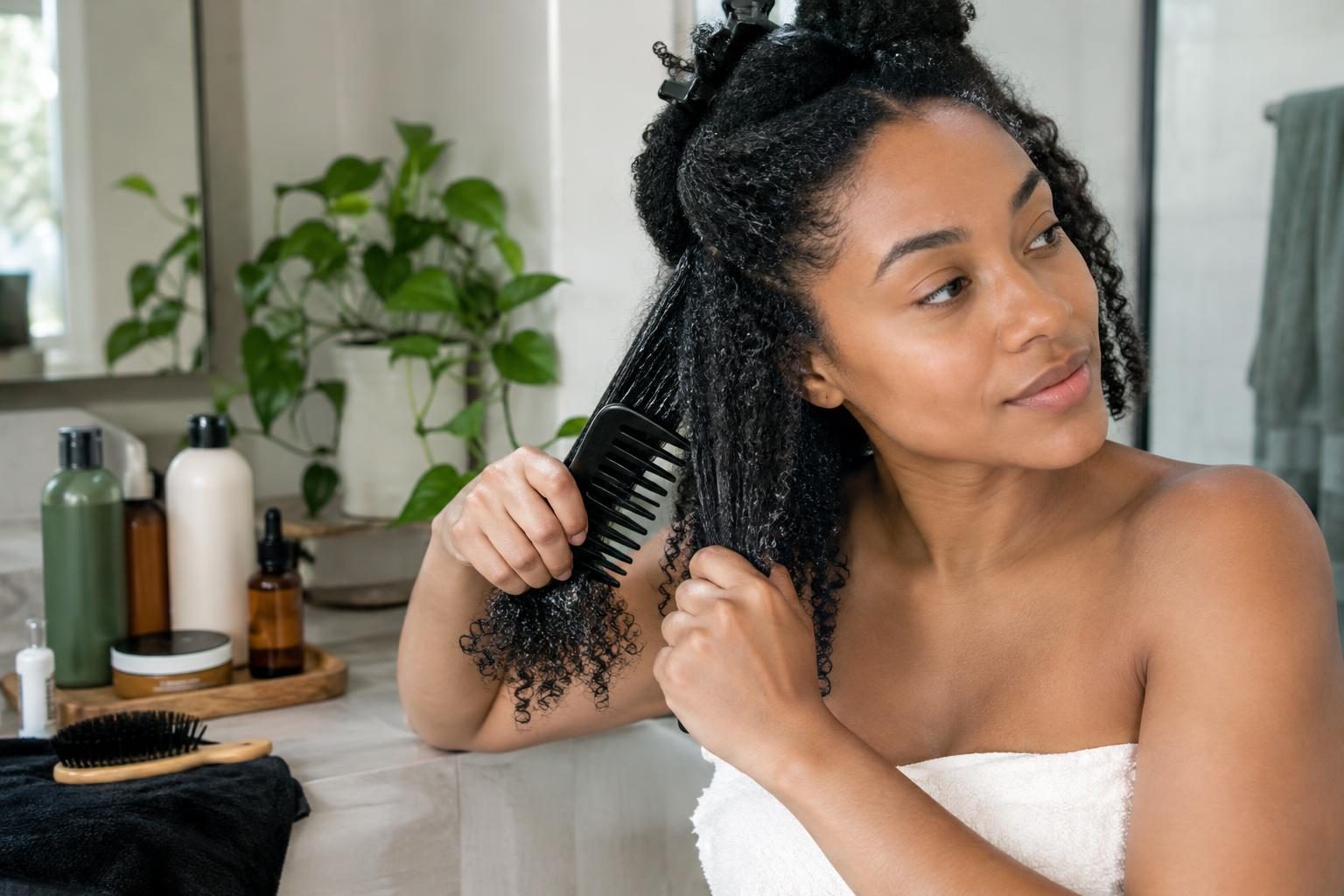
Detangling natural hair without breakage is defined as the process of carefully removing knots and tangles from textured hair while minimizing hair loss and damage. This method is essential for maintaining the health of natural hair, which can be prone to frizz and breakage due to its unique structure. Proper detangling not only keeps your hair manageable but also promotes growth and strength, making it a crucial part of any natural hair care routine.
Table of Contents
- Understand Your Hair Type
- Prep Your Hair for Detangling
- Techniques for Gentle Detangling
- Tools to Consider for Detangling
- Aftercare: What to Do Post-Detangling
- Personal Case Study: The Transformation
- Final Thoughts on Protecting Your Natural Hair
Understand Your Hair Type
Step 1 of 5: Identify Your Hair Texture
Understanding your hair type is the first step in determining how to detangle it effectively. Natural hair typically ranges from 3A to 4C:
- 3A: Loose curls that are well-formed and shiny.
- 3B: Larger curls that may be prone to frizz.
- 3C: Tight curls that are thick and full.
- 4A: Soft, coily hair with a defined curl pattern.
- 4B: Z-shaped curls that may have less definition.
- 4C: Extremely tight and wiry curls, often very fragile.
Your hair type influences how prone it is to tangles, how much moisture it retains, and the best products for you.
Step 2 of 5: Determine Your Hair Porosity
Hair porosity indicates how well hair absorbs and retains moisture. This can be classified as low, normal, or high porosity. You can perform a simple water test to identify your porosity:
- Low Porosity: Hair floats on top of water.
- Normal Porosity: Hair sinks slowly.
- High Porosity: Hair sinks immediately.
Understanding your porosity helps in selecting the right products for pre-detangling treatment.
Step 3 of 5: Consider Your Scalp Health
A healthy scalp supports healthy hair. Look out for redness, itching, or flaking. If you're dealing with scalp issues, such as dryness or dandruff, consider incorporating targeted treatments, like a scalp oil, before detangling.
Step 4 of 5: Assess Hair Damage
Take stock of your hair's condition. Are there visible split ends, dryness, or excessive breakage? Address these issues with proper hair treatments and ensure you're not detangling damaged hair, which is more susceptible to breakage.
Summary
Identifying your hair type, porosity, scalp health, and damage level sets a solid foundation for effective detangling techniques. It's crucial to adapt your approach to meet the specific needs of your hair.
Prep Your Hair for Detangling
H3: 1. Start with Clean, Moisturized Hair
Begin by cleansing your hair with a gentle sulfate-free shampoo to remove buildup without stripping moisture. For instance, Olaplex No.4 Bond Maintenance Shampoo is perfect for this step as it strengthens and moisturizes.
- 💄 Recommended Product: Olaplex No.4 Bond Maintenance Shampoo
This shampoo repairs and strengthens hair while providing intense hydration, ideal for preparing your hair for detangling.
Buy on Amazon
H3: 2. Condition and Detangle in the Shower
Use a rich conditioner like OGX Coconut Milk Conditioner while your hair is still in the shower. Apply a generous amount and finger detangle under the running water.
- 💄 Recommended Product: OGX Coconut Milk Conditioner 13 oz
This conditioner hydrates and softens hair while helping with detangling.
Buy on Amazon
H3: 3. Use a Pre-Poo Treatment
Apply a pre-poo treatment like a lightweight oil or a store-bought product before shampooing. This creates a protective layer around your strands reducing tangles and breakage.
H3: 4. Sectioning Method
Before you start detangling, divide your hair into sections (4-6 is ideal), using clips to keep each section separate. This method minimizes overwhelming tangles and allows you to focus on one section at a time.
H3: 5. Add Moisture with a Leave-In Conditioner
After rinsing out your conditioner, apply a leave-in conditioner to add moisture and help in the detangling process. Look for products that contain ingredients like aloe vera and shea butter for added nourishment.
Techniques for Gentle Detangling
H3: 1. The Finger Detangling Technique
Using your fingers to detangle instead of a brush helps you feel for knots and prevent breakage. Start from the ends and work your way up to the roots. This method is particularly gentler on delicate 4C hair.
H3: 2. Wide-Tooth Comb Strategy
For those who prefer tools, employ a wide-tooth comb after finger detangling. Make sure you use it on gently damp hair, preferably with a leave-in conditioner, to avoid breakage.
H3: 3. The Brush Method
When using brushes, a detangling brush designed for natural hair types can work wonders. Brushes like the Wet Brush Original Detangler glide through the hair smoothly without snagging.
H3: 4. The Downward Pull Technique
When detangling, always pull downwards rather than up to avoid stressing the roots and causing breakage.
H3: 5. Employ the “Cut the Knot” Technique
If you encounter a severe tangle, you may choose to cut it out rather than tugging at the hair. This minimizes tension and preserves the overall health of your hair.
Tools to Consider for Detangling
| Tool Type | Benefits | Best For |
|---|---|---|
| Wide-Tooth Comb | Gentle on hair; effective for thick hair | All hair types |
| Detangling Brush | Reduces frizz; speeds up the detangling process | 4A to 4C hair types |
| Oil Applicator | Helps in applying oil for pre-poo treatments | All hair types |
| Spray Bottler | Keeps hair damp during detangling | Any hair type |
Choosing the right tools tailored to your specific hair type can significantly enhance your detangling experience.
Aftercare: What to Do Post-Detangling
H3: 1. Seal in Moisture
After detangling, lock in moisture with a hair oil, focusing on the ends. Mielle Rosemary Mint Scalp Oil is an excellent option as it nourishes both the scalp and strands.
- 💄 Recommended Product: Mielle Rosemary Mint Scalp Oil
This oil helps to nourish and moisturize the scalp, preventing dryness while supporting hair growth.
Buy on Amazon
H3: 2. Deep Condition Regularly
Incorporate deep conditioning treatments into your routine every 1-2 weeks to maintain moisture levels and elasticity in your hair.
H3: 3. Opt for Protective Styles
Consider protective styles that safeguard your hair from frequent manipulation and damage. Braids, twists, and buns can be effective in retaining length and curl integrity.
H3: 4. Avoid Heat Styling
After detangling, it's important to limit heat exposure. If you must use heat, always apply a heat protectant spray beforehand.
H3: 5. Maintain Regular Scalp Health
Ensure that your scalp remains clean and moisturized to promote healthy hair growth. Regular scalp massages can also stimulate circulation.
Personal Case Study: The Transformation
Case Study: Jasmine's Journey from Tangles to Tamed
Picture Jasmine, a student with 4B natural hair struggling with frequent tangles and breakage, especially after washing. After following a systematic detangling process, alongside regular deep conditioning, her hair flourished over a few months.
Before: Jasmine would frequently encounter stubborn knots that often led to shreds of hair clogging her bathroom drain.
After: Fast forward six months, and she was now flaunting healthier, longer curls with minimal breakage. Choosing the right products and detangling methods made all the difference.
Final Thoughts on Protecting Your Natural Hair
Detangling natural hair without breakage requires patience, the right technique, and appropriate tools. By understanding your hair's unique properties and incorporating effective detangling strategies, you can drastically improve your hair's health and appearance. This journey isn't merely about removing knots but fostering an environment where your natural hair can thrive.
Are you excited to explore more about caring for your hair? Ready to find your perfect haircare match? Browse our full product reviews at ShampooGarage and discover what actually works for your hair type.
Frequently Asked Questions
Q: How often should I detangle my natural hair?
A: It's generally advised to detangle natural hair once a week, especially after deep conditioning or washing, depending on individual hair needs.
Q: Is it better to detangle wet or dry hair?
A: Detangling is generally easier when your hair is damp and has been conditioned, as this helps soften the hair strands and reduces breakage.
Q: What products help in detangling natural hair?
A: Look for creamy leave-in conditioners and detangling sprays that contain moisturizing ingredients, like shea butter or coconut oil.
Q: What common mistakes should I avoid when detangling?
A: Avoid tugging at tangles and using fine-tooth combs on dry hair, as these can lead to significant damage and breakage.
Q: Can I use a regular brush to detangle my hair?
A: It's best to use a detangling brush designed for textured hair as regular brushes can pull and break hair more easily.
Q: Why is my natural hair so tangled?
A: Tangling can be due to dryness, lack of moisture, product buildup, or simply the unique structure of curly hair.
Q: Should I cut knots out of my hair?
A: If a knot is too stubborn, it's better to cut it out rather than tug and break the surrounding hair.
Q: How can I prevent future knots?
A: Regular moisturizing, avoiding excessive manipulation, and protective styling can help minimize knots and tangles.
This article contains affiliate links. If you make a purchase through these links, we may earn a small commission at no additional cost to you.
As an Amazon Associate I earn from qualifying purchases.