General information only. ShampooGarage articles are educational and are not medical or individualized hair, scalp, or skin advice.
Here is an illustrative example. Priya has colored her hair dark brown at home every six weeks for nine years. One Sunday she uses the same box, the same brand, the same shade. By Tuesday her scalp is itching hard, her ears are red, and her eyelids are puffy. She is baffled, because nothing changed. Except something did. Her immune system finally decided it had seen enough of one ingredient.
That ingredient is very often p-phenylenediamine, usually shortened to PPD. It is one of the most common reasons people react to hair dye, and the reaction can show up for the first time after years of trouble free coloring.
What PPD is and why it is in dye
PPD is a chemical used in many permanent oxidative hair dyes, especially darker shades. Mixed with a developer, it forms larger color molecules inside the hair shaft, which is why permanent dye lasts until it grows out. It does a job few alternatives match, which is why it remains common.
The U.S. Food and Drug Administration notes a special legal quirk: coal tar hair dyes, the category that includes PPD, are exempt from some of the rules that apply to other color additives, as long as the label carries a caution statement and instructions for a preliminary patch test. That is the small print on the box most people skip.
Why a reaction can appear out of nowhere
Allergic contact dermatitis works in two stages. First, repeated exposure can sensitize your immune system without any symptoms. Later, one more exposure triggers the reaction. The American Academy of Dermatology describes this delayed pattern: symptoms often appear a day or two after contact, not right away.
So years of quiet use are not proof you are safe. They can be the sensitization stage.
There is another common trigger. Black henna temporary tattoos, sold at beaches and markets, are often spiked with high concentrations of PPD to make them darker. The FDA has warned that these can cause serious skin reactions and can sensitize people so that later hair dye causes a reaction.
What a reaction looks like
Symptoms range from mild to serious:
- Itching, redness, or a burning feeling on the scalp, hairline, ears, or neck
- Small blisters, oozing, or crusting
- Swelling around the eyes and face
- Rarely, a severe allergic reaction with difficulty breathing
You might be thinking a little itch after dyeing is normal. Some tingling during application can happen with harsh products, but itching and swelling that build over the next day or two are a different signal and worth taking seriously.
If you have facial swelling that is spreading or any trouble breathing, treat it as an emergency and seek care immediately. For milder symptoms, rinse the hair and scalp thoroughly with plain water and a gentle shampoo, avoid further coloring, and contact a doctor or pharmacist. A dermatologist can confirm the allergy with formal patch testing.
The patch test on the box
Most permanent dye instructions ask you to do a skin allergy test 48 hours before every use, even if you have used the product before. Typically you mix a small amount and dab it behind the ear or on the inner elbow, leave it uncovered, and check over the next two days for itching, redness, or swelling. Follow the exact steps on your product, since they vary by brand.
It feels fussy. It is also the only way to catch a newly developed allergy before it is on your whole scalp. Salons often require it for the same reason.
A negative test is not a lifetime pass. Sensitivity can change, which is why the instructions say every time.
If you are allergic to PPD
Once you are sensitized, the usual advice is to avoid PPD entirely. Some notes:
- "PPD free" is not always allergy free. Many of these dyes use para-toluenediamine, often listed as toluene-2,5-diamine. Some people allergic to PPD react to it too. Patch test any alternative.
- Read ingredient lists carefully. Look for p-phenylenediamine, PPD, and related names.
- Consider options with different chemistry. Semi permanent and demi permanent dyes, pure henna without additives, or simply going without color for a while. A dermatologist can advise based on your patch test results.
- Tell your stylist. They can check product formulas for you and may know brands that suit your situation.
Your next step is the cheapest one in hair care. Before your next color, mix a pea sized amount, put it behind one ear, and wait the full 48 hours. Set a phone reminder for the check. If anything itches or swells, stop and talk to a dermatologist before the box goes anywhere near your scalp.
Sources
- U.S. FDA, Hair dyes
- U.S. FDA, Temporary tattoos, henna/mehndi, and "black henna"
- American Academy of Dermatology, Contact dermatitis: diagnosis and treatment
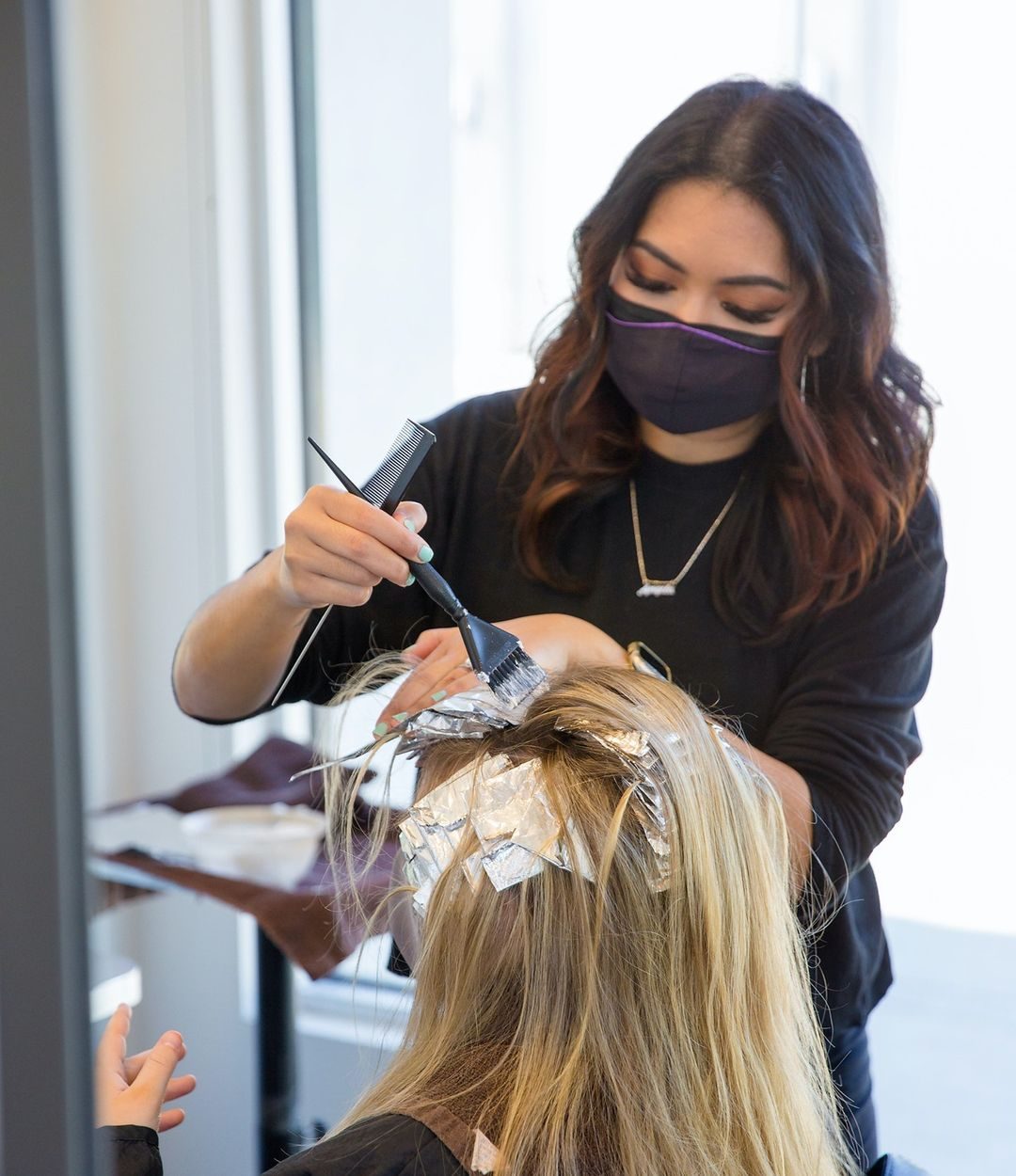
Image: Hair coloring at hair salon (51213255633), Hair Spies from US. CC BY 2.0, via Wikimedia Commons.
