General information only. ShampooGarage articles are educational and are not medical or individualized hair, scalp, or skin advice.
Conditioner slip is defined as the ability of a conditioner to create a smooth texture on hair, allowing it to glide through tangles and knots easily. This characteristic is crucial for effective detangling, which helps reduce hair breakage, split ends, and overall damage. Understanding the science of slip can help you choose the right conditioner to maximize manageability and shine.
Table of Contents
- What is Slip in Haircare?
- Key Ingredients That Affect Slip
- The Role of pH in Conditioner Slip
- Types of Hair and Their Slip Needs
- Understanding Detangling Techniques
- Top Conditioners for Slip in 2026
- How to Test the Slip of a Conditioner
What is Slip in Haircare?
When it comes to haircare, slip refers to the smoothness and ease with which hair can be detangled after applying a conditioner. This property primarily stems from the formulation of the product, which can influence how it interacts with hair fibers. Conditioners with good slip help minimize damage that occurs from tugging and pulling on knots.
Applying slip effectively can be a game-changer for those with textured or damaged hair. It reduces friction and makes the hair easier to manage, leading to healthier and shinier locks in the long run.
Key Ingredients That Affect Slip
Silicones: Smooth Operators
Silicones are frequently used in hair products due to their ability to provide significant slip. These synthetic compounds coat the hair strands, creating a barrier that reduces friction. Common silicones include Dimethicone, Cyclopentasiloxane, and Amodimethicone.
Benefits of Silicones:
- Provide a silky, smooth finish
- Help repel humidity, reducing frizz
- Offer protection against environmental stressors
However, silicones can build up over time, especially with consistent use without clarifying shampoos. For some enthusiasts of natural haircare, avoiding silicones is essential, while others appreciate their instant benefits.
Emollients: The Moisturizing Marvels
Emollients like natural oils (e.g., jojoba oil, almond oil) and butters (e.g., shea butter) contribute to the slip of a conditioner by deeply moisturizing and softening hair. Emollients penetrate the hair shaft and enhance elasticity, making it less prone to damage.
Notable Emollients:
- Coconut Oil: Penetrates the hair shaft, providing nourishment
- Olive Oil: Rich in antioxidants and effective for deep conditioning
- Shea Butter: Adds moisture and creates a protective barrier
Incorporating conditioners rich in emollients can be particularly beneficial for dry or textured hair types.
Polyquaterniums: A Film-Forming Friend
Polyquaterniums are conditioned-forming agents that deposit a thin film on the hair. This film provides slip without the heaviness of silicones and is less prone to buildup.
Advantages of Polyquaterniums:
- Excellent detangling properties
- Improve tensile strength and overall manageability
- Natural-feeling finish compared to heavier silicones
For many, polyquaterniums represent a balanced option between effective detangling and maintaining hair health.
The Role of pH in Conditioner Slip
The pH level of a conditioner significantly influences the cuticle's state, which affects slip. Most conditioners aim for a pH range of 4.5 to 5.5, which is slightly acidic. This acidity helps to close the hair cuticle after cleansing, allowing for smoother hair that is more receptive to slip.
High pH conditioners can lead to raised cuticles, making hair feel rough and tangly. Understanding how pH affects your hair can help you choose products that leave your strands in optimal condition.
Types of Hair and Their Slip Needs
Not all hair types benefit from the same conditioning formulations. Here’s a breakdown of specific needs based on different hair textures.
Fine Hair: Light and Sleek
For fine hair, lightweight conditioners with ample slip are critical. They should quickly absorb without weighing the hair down. Look for formulas with lower silicone content for effective detangling.
Recommended Fine Hair Conditioners:
- Products featuring polyquaterniums or light emollients like aloe vera.
Curly and Coily Hair: Hydration Heroes
Textured hair types often require richer products packed with emollients and silicones that promote moisture retention and slip. Conditioners should be thick and capable of defining curls.
Must-Have Details:
- SheaMoisture Curl Enhancing Smoothie
- Ideal for enhancing natural curls while ensuring detangling is seamless.
Thick and Coarse Hair: Heavyweight Conditioners
This hair type thrives on richer, more substantial formulas that provide maximum moisture retention and slip. Heavy emollients work wonders.
Top Choices:
- Creamy conditioners with high amounts of oils, butters, and heavier silicones.
Understanding Detangling Techniques
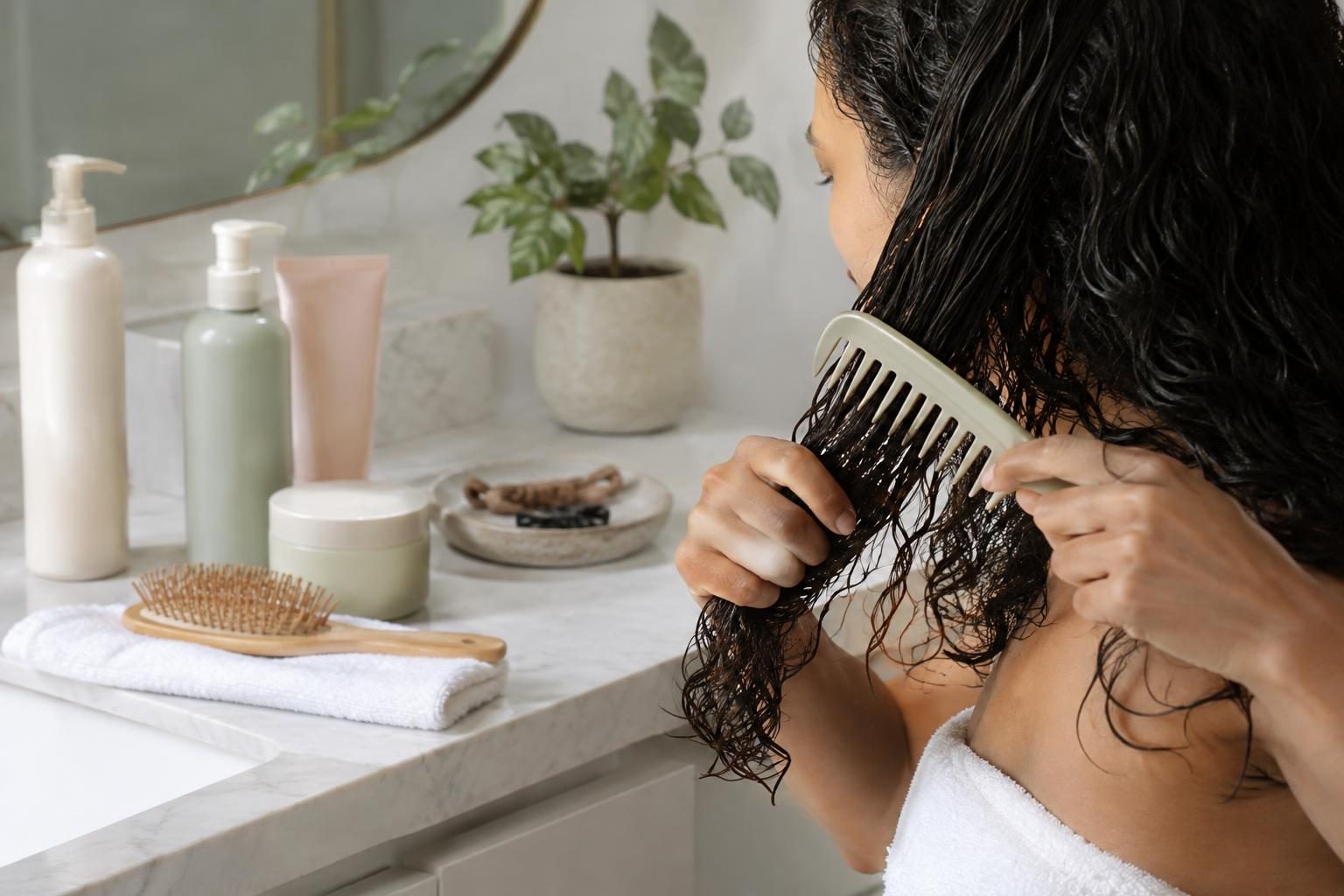
Once you’ve selected a conditioner with good slip, technique is essential. Proper detangling can help maintain hair health. Here’s a brief guide:
- Start with Wet Hair: Always detangle when your hair is wet for the best results.
- Use the Right Tool: A wide-tooth comb or a detangling brush is ideal.
- Work in Sections: Divide hair into manageable sections to ensure you don’t miss any tangles.
- Be Gentle: Start from the ends and work your way to the roots to minimize breakage.
- Apply Conditioner Evenly: Ensure your conditioner is evenly distributed for maximum slip.
Top Conditioners for Slip in 2026
Here is a curated list of powerful conditioners that offer excellent slip in 2026:
| Conditioner Name | Key Ingredients | Best For | Slip Rating |
|---|---|---|---|
| Olaplex No.4 Bond Maintenance Shampoo | Bis-aminopropyl Diglycol Dimaleate | Dry, damaged hair | High |
| OGX Coconut Milk Conditioner | Coconut Oil, Hydrolyzed Proteins | All hair types | Medium |
| SheaMoisture Curl Enhancing Smoothie | Shea Butter, Coconut Oil | Curly or coily hair | High |
| Moroccanoil Treatment | Argan Oil, Vitamins | Frizzy hair | High |
💄 Recommended Product: OGX Coconut Milk Conditioner
This conditioner hydrates while providing excellent slip, making it a must for effortless detangling.
How to Test the Slip of a Conditioner
Evaluating a conditioner’s slip can be done using a simple at-home test:
Step 1 of 3: Gather Materials
- A small section of hair (preferably clean and dry)
- A piece of tangle-free fabric (like silk)
- The conditioner you want to test
Step 2 of 3: Apply It
- Apply a small amount of the conditioner on the hair sample.
- Glide your fingers along the length of the hair.
Step 3 of 3: Observe
- Check for how easily your fingers glide down. The smoother the glide, the better the slip.
For many readers, this simple test can be an excellent approach to finding functional and effective conditioners tailored to their needs.
Frequently Asked Questions
Q: What does conditioner slip mean?
A: Conditioner slip refers to the ability of a conditioner to allow hair to glide through, making it easier to detangle without causing breakage or damage.
Q: Are silicones bad for my hair?
A: Silicones aren’t inherently bad; however, they can lead to buildup if not properly cleansed. A balance between silicone use and clarifying shampoos is often recommended.
Q: How do I know what type of conditioner to choose for my hair type?
A: Understanding your hair's texture and characteristics—like porosity and thickness—can guide you to select a conditioner with ingredients that will work best for you.
Q: Can I use a leave-in conditioner instead of regular conditioner?
A: Yes, leave-in conditioners can be effective and help provide slip while remaining in the hair to offer ongoing moisture throughout the day.
Q: Is there a natural alternative to conventional conditioners?
A: Yes, many natural oils (e.g., argan oil, jojoba oil) can serve as beneficial alternatives for providing slip and moisture without synthetic ingredients.
Q: How often should I condition my hair?
A: Generally, conditioning every time you shampoo is recommended, but those with very dry or damaged hair may need to condition more frequently.
Q: What ingredients should I look for to improve slip?
A: Look for conditioners that contain silicones, emollients (natural oils), and polyquaterniums to enhance slip and detangling capacity.
Q: What is the best way to detangle hair?
A: Always detangle with wet hair and use a wide-tooth comb or detangling brush, working from the ends upwards while applying a conditioner with good slip.
Conclusion + CTA
The science behind slip reveals just how vital the right conditioner can be for maintaining healthy, manageable hair. As you experiment with different products—taking note of key ingredients and techniques—you’ll discover what works best for your unique hair type. Understanding slip not only enhances your detangling experience but also promotes the overall health of your hair.
Ready to find your perfect haircare match? Browse our full product reviews at ShampooGarage and discover what actually works for your hair type.
This article includes affiliate links.
As an Amazon Associate I earn from qualifying purchases.
As an Amazon Associate I earn from qualifying purchases.